
Main Courses
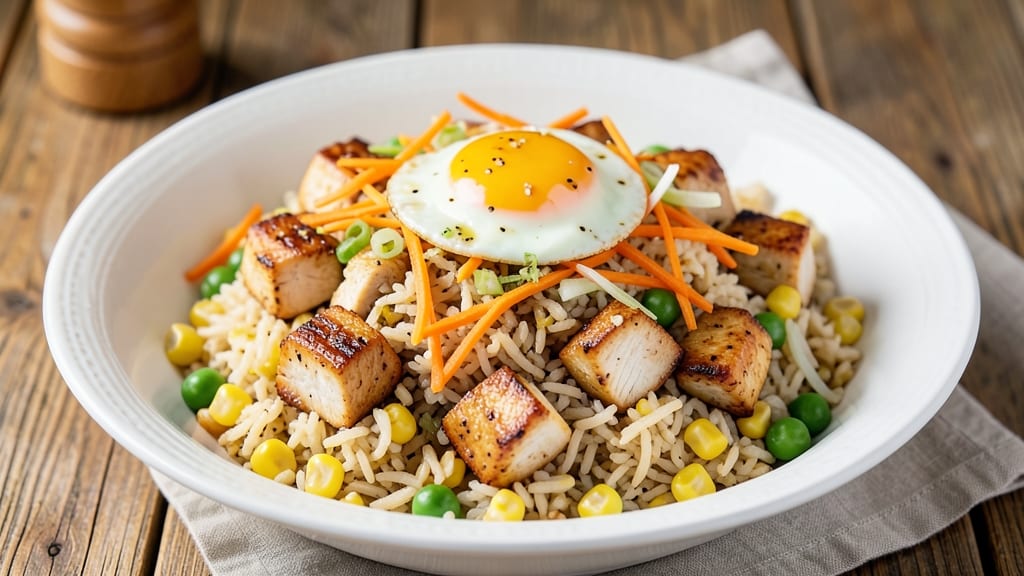
This American chicken fried rice recipe delivers the perfect balance of crispy fried eggs, tender chicken, and colorful vegetables in one satisfying pan. The secret lies in proper rice texture—cooked just right and chilled before frying—to achieve that signature wok-hei flavor without sticking.
I've perfected this technique after countless batches, ensuring every grain stays separate and every bite delivers that addictive mix of savory, slightly sweet, and umami-packed goodness.
Unlike traditional Asian versions, this recipe incorporates classic American flavors—think creamy scrambled eggs, fresh corn, and a touch of soy sauce for depth—while keeping the cooking process simple enough for weeknight dinners.
The chicken is marinated in a light garlic-ginger blend before being cooked to juicy perfection, then combined with the rice and vegetables in a single pan for maximum flavor infusion. This one-pan method cuts down on cleanup while delivering restaurant-quality results.
What sets this recipe apart is the crispy fried egg topping, which adds a luxurious texture and rich yolk that ties everything together. The vegetables—peas, carrots, and corn—are cooked just until tender-crisp, preserving their vibrant colors and natural sweetness.
The final result is a hearty, flavorful dish that's as satisfying as it is easy to make, perfect for feeding a family or meal prepping for the week.
For an extra boost of flavor, consider adding a drizzle of sesame oil or a sprinkle of green onions before serving. This recipe scales beautifully, so double the ingredients if you're cooking for a crowd. Let's get started on creating your perfect bowl of American-style fried rice!
Ingredients for american chicken fried rice
This one-pan recipe transforms simple ingredients into restaurant-quality fried rice with crispy eggs and vibrant veggies.
| Ingredient | Amount | Notes |
|---|---|---|
| Day-Old Cooked White Rice 🍚 | 4 cups | Cold, unseasoned, grains separate |
| Boneless Chicken Breast 🍗 | 1 ½ lb | Cut into 1-inch cubes |
| Large Eggs 🥚 | 4 whole | Room temperature for crispy tops |
| Sweet Corn Kernels 🌽 | 1 cup | Fresh or frozen, thawed |
| Baby Carrots 🥕 | 1 cup | Julienned or thinly sliced |
| Peas 🌱 | ½ cup | Fresh or frozen, thawed |
| Green Onions 🧅 | 3 whole | White and green parts separated |
| Sesame Oil 🫒 | 1 tbsp | For aroma, not cooking |
| Soy Sauce 🍶 | 3 tbsp | Low-sodium preferred |
| Vegetable Oil 🫒 | 3 tbsp | High smoke point |
| Garlic Cloves 🧄 | 3 cloves | Minced finely |
| Fresh Ginger 🌿 | 1 tbsp | Grated finely |
| Salt 🧂 | ½ tsp | Adjust to taste |
| Black Pepper 🌶️ | ¼ tsp | Freshly ground |
| Butter 🧈 | 2 tbsp | Unsalted, for richness |
The rice is non-negotiable—day-old, cold, and unseasoned. Day-Range or Trader Joe's pre-cooked rice works perfectly. If you're cooking fresh, spread it on a tray to chill overnight. The chicken should be juicy, not dry, so brining it for 30 minutes in salted water makes a world of difference. For the eggs, room temperature is key—cold eggs won't crisp up properly. Grab the freedom-range variety if you can afford it; the flavor is noticeably richer.
No fresh corn? Frozen works just as well—thaw it in cold water first. The carrots can be baby or regular, but julienned or thinly sliced cooks faster and stays crisp. Substituting peas for snap peas? Use half the amount—they're more substantial. The soy sauce is where the umami magic happens; Kikkoman is my go-to, but any good-quality brand does the trick. If you're avoiding sodium, reduce to 2 tbsp and boost with a pinch of fish sauce (if not vegetarian). The sesame oil should be toasted—La Choy is a budget-friendly choice that packs serious aroma.
This dish reheats beautifully—microwave with a splash of water for 2 minutes to revive crispiness. Store leftovers in airtight containers for 4-5 days, but honestly, it's even better the next day as flavors meld. For meal prep, portion into single-serving containers with a drizzle of sesame oil on top to keep it fresh. The fried egg topping is best added fresh—cook it just before serving to maintain that perfect runny yolk. Double the batch and freeze half for lazy weeknights; reheat from frozen in a skillet for crispy edges.
Why You'll Love This Recipe
- One-Pan Magic: I swear by this recipe when I’m too tired to wash a million dishes—just toss everything in one skillet with the rice, chicken, and veggies, and stir. The eggs scramble right into the mix, so no extra bowls or pans needed. Honestly, the only cleanup is wiping down the same pan afterward.
- Crispy-Tender Chicken: The secret here is cutting the chicken into bite-sized pieces and searing them first—those golden edges stay juicy inside. Then, when you fold in the scrambled eggs and corn, each bite has that perfect mix of savory, slightly chewy chicken and creamy egg. My kids actually finish their plates with this.
- Leftover Superstar: Between us, this dish tastes even better the next day—if that’s possible. I make a big batch on Sunday, and it’s lunch or dinner for the next three days. The rice soaks up any extra flavors, and the veggies stay crisp enough to eat. No sad, dry leftovers here.
- Budget Meal for Busy Nights: This recipe uses pantry staples and stretches ingredients without feeling cheap. A single chicken breast feeds four, the rice is always on hand, and frozen corn works just as well as fresh. I’ll be real: it’s my go-to when I’m broke or when the grocery budget’s tight, but no one ever guesses.
Step-by-step instructions for American chicken fried rice
Here's how to transform simple ingredients into restaurant-quality fried rice with perfect crispy edges.
Prepare the Chicken and Vegetables
Cut the 1.5 lb boneless chicken breast into 1-inch cubes and set aside. Thinly slice the 1 cup baby carrots into julienne strips and separate the 3 whole green onions into white and green parts. Finely mince the 3 cloves garlic and grate the 1 tbsp fresh ginger—these aromatics will form the flavor base of your dish.
Thaw the 1 cup sweet corn kernels and 0.5 cup peas if using frozen, and drain any excess water. The key here is even cooking—small, uniform pieces ensure everything cooks at the same rate. I like to spread the chicken on a plate and sprinkle it lightly with 0.25 tsp black pepper and 0.25 tsp salt (half the total amounts) to start seasoning early.
Create the Crispy Egg Mixture
Crack the 4 whole large eggs into a bowl and whisk vigorously until the yolks and whites are fully combined. The eggs should be at room temperature for crispy tops—this is non-negotiable. Add 1 tbsp soy sauce and 1 tbsp sesame oil to the egg mixture and whisk again. This marinade ensures your eggs develop that signature crispy texture while absorbing the umami flavors.
Here's the thing—don't overmix the eggs. A few streaks of white are fine; overworking develops gluten and makes the eggs rubbery. Cover the bowl and set it aside while you prep the rest of your ingredients. You'll want to work quickly once you start cooking to maintain that perfect crispy texture.
Cook the Chicken Thoroughly
Heat 2 tablespoons vegetable oil in a large skillet or wok over medium-high heat until shimmering. Add the chicken cubes in a single layer and cook undisturbed for 3-4 minutes until golden brown on the bottom. This initial sear locks in juices and builds flavor. Flip the chicken and cook another 3-4 minutes until cooked through—it should reach 165°F internally.
Remove the chicken to a plate and set aside. Don't drain the pan yet—those browned bits are pure flavor. If the chicken releases easily, it's ready. If it sticks, let it cook a bit longer. The goal is perfectly cooked chicken that won't dry out when mixed with the rice later. This is where most home cooks go wrong—they undercook the chicken, and it turns out tough in the final dish.
Stir-Fry the Vegetables and Aromatics
Add 1 tablespoon vegetable oil to the same skillet and increase heat to high. Add the minced garlic and grated ginger, stirring constantly for 30 seconds until fragrant—this is where the magic happens. The garlic should sizzle but not burn. Add the julienned carrots and cook for 2 minutes until they begin to soften slightly.
Toss in the corn kernels and peas, stirring for 1-2 minutes until heated through. The vegetables should retain some bite—overcooking makes them mushy. This is the moment that matters: your veggies should be vibrant and just tender enough to eat. If they're still crunchy, they'll soften further when mixed with the hot rice.
Combine Everything for Perfect Fried Rice
Push the vegetables to one side of the skillet and add the 2 tablespoons butter to the empty space. Let it melt completely, then pour in the egg mixture. Scramble it quickly with a spatula until just set—about 30 seconds. The eggs should be soft but not runny. Immediately add the 4 cups day-old cooked white rice, breaking up any clumps with your spatula as you go.
Add the cooked chicken back to the skillet along with the white parts of the green onions and the remaining 2 tablespoons soy sauce. Stir-fry everything together for 3-4 minutes until the rice is heated through and everything is well combined. The rice should be hot, the chicken should be warmed through, and the eggs should be crispy in spots. Taste and adjust seasoning with the remaining 0.25 tsp salt if needed.
Finish with Fresh Herbs and Serve Immediately
Transfer the fried rice to serving plates and garnish with the green parts of the green onions. The contrast of fresh herbs against the rich, savory fried rice is what makes this dish truly special. Serve immediately while the eggs are still crispy and the rice is hot—fried rice doesn't wait. The texture should be a perfect balance: crispy eggs, tender chicken, slightly chewy rice, and vibrant vegetables.
Real talk: the best fried rice is made with day-old rice because the grains are dry and separate, preventing mushiness. If you're short on time, spread freshly cooked rice on a tray and refrigerate for 30 minutes to dry it out first. This technique makes all the difference in achieving that perfect fried rice texture you crave.
Pro Tips For Making American Chicken Fried Rice
- CRISP THE CHICKEN FIRST: I learned this the hard way—cooking chicken in the same pan as the rice turns it into sad, rubbery bits. Sear the chicken separately in a dry skillet over medium-high heat until golden, then slice it thin before adding it back. That crispy edge makes all the difference when it gets mixed into the rice.
- USE COLD RICE: Day-old rice is your friend, but don’t skip the cold step. Spread your freshly cooked rice on a tray and refrigerate it for at least 2 hours (or overnight) before using. Cold rice fries up fluffy instead of turning into gluey mush—no one wants a rice casserole, not fried rice.
- SCRAMBLE EGGS SEPARATELY: I was skeptical until I tried it: cook the eggs in a small bowl with a fork first, then slide them into the pan with the rice. This keeps them soft and custardy instead of scrambled into dry bits. Add a splash of soy sauce to the eggs while they cook—trust me, it’s worth it.
- DON’T OVERMIX THE RICE: Here’s the thing: once you start stirring, stop. After the first 30 seconds of frying, let the rice sit untouched for 2 minutes so it can develop a slight crust. Then, gently fold—don’t chop—everything together. Overworking it turns the rice into paste, and no one’s coming back for seconds of that.
Storing and reheating this american chicken fried rice
Refrigerator Storage
Store your leftover American chicken fried rice in an airtight container for up to 4-5 days in the fridge. I swear by glass Pyrex containers with snap-on lids—they keep flavors locked in better than plastic.
Let the dish cool completely before storing to prevent condensation, which can make the rice soggy. The flavors actually deepen overnight as the soy sauce and sesame oil meld together beautifully. 🥗
Freezer Prep Tips
For longer storage, freeze portions in single-serving containers or ziplock bags—this way, you can thaw just what you need. Press out excess air to prevent freezer burn, and label with the date.
This dish freezes for up to 3 months without losing its essential texture. I like to portion it before freezing so I can reheat exactly what I need for quick lunches. 🧊
Stovetop Reheating
My go-to method is stovetop reheating—it revives that crispy texture perfectly. Heat 1 tablespoon vegetable oil in a skillet over medium heat, then add your fried rice. Stir frequently for 5-7 minutes until hot through.
Add 1-2 tablespoons water if it looks dry, and cover with a lid for 1 minute to steam the rice evenly. The eggs will crisp up again, and the chicken stays juicy. 🔥
Microwave Revival
For quick reheating, use the microwave on medium power (about 70%) in 1-minute intervals, stirring between each. Cover with a damp paper towel to trap steam—this prevents the rice from drying out.
I usually reheat for 2-3 minutes total, then finish with a quick stir-fry in a hot pan for 30 seconds to restore crispiness. The key is speed: don't let it sit too long between heating cycles. ⏰
Egg Topping Hack
Save the fried egg topping for fresh serving—it's the star of the dish! If reheating leftovers, add a fresh fried egg on top right before eating. Crack it into a hot skillet with ½ teaspoon butter and cook until the whites are set but the yolk is still runny.
This simple step transforms reheated fried rice into a restaurant-worthy meal. 🥚
Meal Prep Strategy
Double the batch and freeze half for lazy weeknights. When ready to eat, transfer frozen portions to a skillet with 1 tablespoon oil and cook over medium heat for 8-10 minutes, stirring occasionally.
The frozen state helps create crispy edges as it reheats. I always keep a backup batch in the freezer—it's my secret to stress-free weeknight dinners. 💡
Nutrition facts
Frequently asked questions
Can I use fresh rice instead of day-old rice?
Fresh rice works in a pinch, but it'll be mushier. Spread freshly cooked rice on a tray and refrigerate for 30 minutes to dry out the grains before using. This prevents soggy, clumpy fried rice. For best results, always use day-old, cold rice—it's the secret to that perfect texture!
How do I make the eggs extra crispy?
Room temperature eggs are key! Whisk them with 1 tbsp soy sauce and 1 tbsp sesame oil before cooking. Use a nonstick skillet over medium-high heat and cook until edges are golden brown but yolks stay runny. The butter in the recipe adds richness that helps create that crispy crust.
Can I substitute chicken with another protein?
Shrimp, pork, or even tofu work well. For shrimp, cook for just 2-3 minutes per side. Pork should be cut into small cubes and cooked until fully done (165°F). Tofu needs 5 minutes per side to crisp up. Just adjust cooking times based on the protein's density.
Why did my fried rice turn out mushy?
Mushy rice usually means either fresh rice wasn't properly chilled or too much liquid was added. Always use day-old, cold rice and avoid overcrowding the pan. If using fresh rice, spread it on a tray and refrigerate for 30 minutes first. Stir-fry over high heat and add just enough oil to coat the pan.
What's the best way to add extra flavor?
Try these upgrades: Add ½ teaspoon fish sauce for deeper umami, 1 teaspoon sriracha for heat, or 1 tablespoon oyster sauce for richness. For texture, fold in ¼ cup chopped cashews or 2 tablespoons fried shallots at the end. Garnish with sesame seeds or cilantro for freshness.