
Main Courses
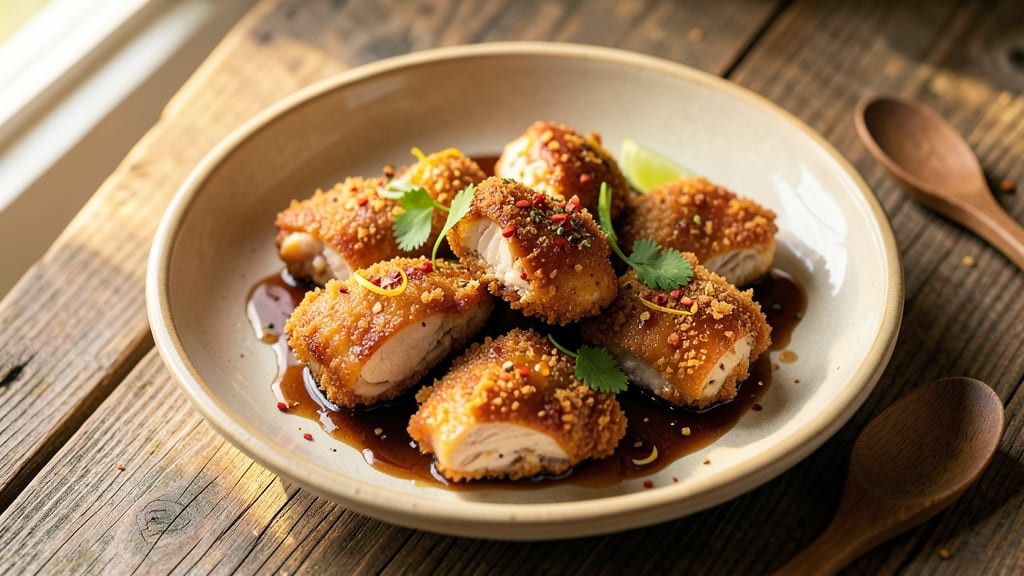
This Asian crispy fried chicken recipe delivers restaurant-quality crunch with a fragrant lime zest twist that transforms ordinary chicken into an irresistible dish. The double-dredging technique creates an extra-crispy exterior while keeping the meat juicy inside—a balance that separates home cooks from the pros.
What makes this recipe stand out is the aromatic marinade infused with ginger, garlic, and lime, which adds depth beyond standard fried chicken flavors.
The secret to achieving that signature crispiness lies in the breading process: a combination of cornstarch and rice flour creates a light, airy crust that stays crunchy even after frying. I've perfected this method over countless batches, ensuring the chicken emerges golden-brown with a satisfying crackle.
The lime zest not only brightens the flavor but also adds a subtle citrus aroma that lingers in every bite.
What you'll end up with is chicken that's dangerously crispy on the outside and tender on the inside, coated in a fragrant lime-infused crust that's impossible to resist. This recipe is designed to impress whether you're feeding a crowd or treating yourself to a special meal.
The technique is straightforward but requires attention to detail—especially during the frying stage—to maintain that perfect texture.
Pair with a side of sweet chili sauce or a simple cucumber salad to complete the meal. The crispy chicken holds up beautifully, making it ideal for meal prep or serving at gatherings. Let's get started on creating this restaurant-worthy dish at home.
Ingredients for asian crispy fried chicken
Restaurant-quality crunch starts with these 13 ingredients—each playing a key role in that signature double-dredged texture.
| Ingredient | Amount | Notes |
|---|---|---|
| Boneless, Skinless Chicken Thighs 🍗 | 2 ½ lb | Cut into 1-inch pieces |
| All-Purpose Flour 🌾 | 1 cup | For first dredge |
| Cornstarch 🌾 | ½ cup | Lightens the crust |
| Rice Flour 🌾 | ½ cup | For crispy texture |
| Salt 🧂 | 1 ½ tbsp | Kosher or sea salt |
| Ground Black Pepper 🌶️ | 1 tsp | Freshly ground preferred |
| Garlic Cloves 🧄 | 6 cloves | Minced for marinade |
| Fresh Ginger 🌿 | 2 tbsp | Grated, aromatic |
| Lime Zest 🍋 | 1 tbsp | Bright citrus flavor |
| Soy Sauce 🍶 | ¼ cup | For marinade depth |
| Vegetable Oil 🫒 | 3 cups | High smoke point |
| Eggs 🥚 | 1 whole | Beaten for binding |
| Green Onions 🧅 | 3 whole | Chopped for garnish |
The chicken thighs are non-negotiable—bone-in stays juicier, but boneless works too. Look for thighs with good marbling at Whole Foods or local butchers for the best texture. Cut them uniformly to 1-inch pieces for even cooking. The cornstarch and rice flour combo is what creates that signature crispiness—Bob's Red Mill brands work perfectly. For the marinade, fresh ginger and lime zest are essential; dried spices just won't cut it here. The soy sauce should be light or all-purpose—avoid the dark variety unless you want extra color.
No cornstarch? Substitute with arrowroot powder at the same amount—it works almost identically. Running short on rice flour? All-purpose flour plus a pinch of baking powder mimics the texture. For the marinade, fish sauce can replace half the soy sauce if you're craving Southeast Asian flavors. The green onions are optional but add a fresh pop—substitute with scallions or cilantro if needed. Pro tip: Let the marinade sit for 30 minutes before dredging for maximum flavor penetration. And if you're frying, keep the oil at 350°F—any hotter and you'll burn the crust before the chicken cooks through.
The chicken stays crispy for about 2 hours at room temperature if you're serving immediately, but for meal prep, reheat in a 350°F oven for 10 minutes to restore that satisfying crunch. Store leftovers in an airtight container for up to 3 days—the flavor actually improves after the first day as the marinade infuses further. For freezing, bread the chicken but don't fry—store in a single layer before transferring to a bag, then fry fresh when ready. This method keeps the pieces from sticking together, ensuring perfect texture every time.
Why You'll Love This Recipe
- No Fuss Coating: I swear by the three-flour combo—all-purpose, cornstarch, and rice flour—that clings like glue without the mess. No dredging twice, no sticky fingers; just pat dry, toss, and fry. Honestly, it’s the kind of recipe where even my kids can help (and usually do).
- Crunch That Stays: That first bite? Chef’s kiss. The rice flour gives it that shatteringly crisp shell while the cornstarch keeps the inside juicy. Not the soggy kind—this stays crispy for hours, even after reheating. (Yes, even on a Tuesday night.)
- Meal Prep MVP: Double batch it, store in the fridge, and toss in the air fryer for 3 minutes when hunger strikes. Works in bento boxes, over rice, or straight from the container. My lunchbox has never been happier.
- Budget-Friendly Crunch: Chicken thighs are forgiving and cheap, and this recipe uses pantry staples. No specialty ingredients, no markups—just flavor for less. Between us, this is how I feed a household of four for under $15. No guilt, all satisfaction.
Step-by-step instructions for Asian crispy fried chicken
Master the double-dredge technique for restaurant-quality crunch every time.
Marinate the Chicken for Maximum Flavor
In a large bowl, combine the 2.5 lb boneless, skinless chicken thighs cut into 1-inch pieces, 6 cloves minced garlic cloves, 2 tbsp grated fresh ginger, 1 tbsp lime zest, and 0.25 cup soy sauce. Use your hands to mix everything thoroughly, ensuring each piece absorbs the marinade. Let it sit uncovered in the refrigerator for at least 30 minutes (up to 4 hours for deeper flavor). This step infuses the chicken with aromatic brightness that shines through the crispy crust.
I press the marinade into the chicken pieces firmly—this guarantees even flavor distribution. The lime zest adds a subtle citrus tang that balances the richness of the fried coating, while the soy sauce contributes umami depth. Don't skip this marinating time; it's what transforms good fried chicken into exceptional fried chicken.
Create the Double-Dredge Battering Stations
Set up three separate bowls. In the first bowl, whisk together 1 cup all-purpose flour, 1.5 tbsp salt, and 1 tsp ground black pepper. This forms your initial dry coating that will create the foundational texture. In the second bowl, beat 1 whole egg until completely smooth—this acts as the binder that helps the second coating adhere perfectly.
For the third bowl, combine 0.5 cup cornstarch, 0.5 cup rice flour, and an additional 0.5 tbsp salt. The cornstarch lightens the crust while the rice flour creates that signature crispy texture we're after. I use separate bowls to prevent cross-contamination and ensure each layer performs its specific function in the final product.
Double-Dredge for Maximum Crunch
Remove the marinated chicken from the refrigerator and let it sit at room temperature for 10 minutes—this prevents cold spots that could make the oil splatter. Working in batches to avoid crowding, dredge each piece first in the flour mixture, pressing gently to coat all surfaces. Shake off any excess, then dip into the beaten egg, allowing any excess to drip off. Finally, coat thoroughly in the rice flour mixture, pressing firmly to ensure even coverage.
Here's where the magic happens: the double-dredge creates two distinct textures—a crispy outer layer from the rice flour and a lighter, airier interior from the cornstarch. I like to work quickly but carefully, making sure each piece gets equal attention. Let the double-dredged chicken rest for 5 minutes before frying—this allows the coatings to slightly adhere, preventing them from falling off during frying.
Fry to Golden Perfection
Heat 3 cups vegetable oil in a deep fryer or heavy pot to 350°F—use a thermometer to monitor the temperature precisely. When the oil is properly heated, add the chicken pieces in a single layer, being careful not to overcrowd the pan. Fry for 6-8 minutes, turning occasionally, until the chicken reaches an internal temperature of 165°F and develops a deep golden brown color.
The oil temperature is critical here—too hot and the exterior burns before the interior cooks; too cool and the chicken becomes greasy. I maintain the temperature by adding small amounts of oil as needed. You'll know it's done when the crust is crispy and the chicken releases easily from the oil. Transfer fried chicken to a wire rack set over a paper towel-lined plate to drain excess oil.
Rest and Garnish for Serving
Let the fried chicken rest for 5 minutes before serving—this crucial step allows the internal juices to redistribute, preventing them from escaping when you cut in. While resting, finely chop the 3 whole green onions for garnish. The slight bite of fresh green onions adds a final bright note that complements the rich, crispy chicken.
Serve immediately with your favorite dipping sauce or squeeze of lime. Each piece should have a shatteringly crisp exterior that gives way to juicy, flavorful chicken underneath. The lime zest and soy sauce marinade should be detectable in every bite, proving that even the crispy crust can't hide great flavor.
Pro Tips For Making Asian Crispy Fried Chicken
- CHOP THIGHS UNEVENLY: Cut the chicken thighs into 1.5-inch chunks—some thicker, some thinner. This creates more surface area for the rice flour-cornstarch mix to cling to, ensuring every bite gets that satisfying crunch. (Yes, it looks messy, but that’s how you get consistent crispiness.)
- DOUBLE-DREDGE LIKE A PRO: After the first flour dip, let excess drip off for 10 seconds before hitting the rice flour-cornstarch blend. The second dip seals the deal—skip it, and your coating will slide off mid-fry. (I learned this after watching my first batch turn into a sad, half-coated pile.)
- FRY IN BATCHES OF 2: Crowd the pan, and you’ll steam the chicken instead of crisp it. Two pieces max per fry—give them space to sizzle and turn golden in 3-4 minutes. (Your oil will thank you, and so will your taste buds.)
- REST BEFORE SERVING: Pile the fried chicken on a wire rack (not paper towels) and let it sit for 5 minutes. This lets the moisture redistribute, so the first bite isn’t soggy. (I know, you want to eat it now—but trust me, it’s worth the wait.)
Troubleshooting perfect results
Oil Temperature Troubles
If your chicken emerges greasy instead of crispy, your oil temperature is likely too low. Use a candy thermometer to maintain 350°F—any lower and the crust absorbs oil instead of staying crisp.
I recommend Avocado oil for its high smoke point and neutral flavor. For deep fryers, preheat for 20 minutes before adding chicken to ensure consistent temperature. 🌡️
Conversely, oil that's too hot (above 375°F) burns the crust before the chicken cooks through. This creates a bitter taste and uneven texture. Keep a small bowl of ice water nearby to quickly cool the oil if it overheats.
I've ruined batches this way—trust me, a thermometer is worth every penny.
Uneven Crispiness
If some pieces are crispy while others are soft, your double-dredge technique needs adjustment. Press each piece firmly into the rice flour mixture—don't just dust it. The cornstarch layer must adhere completely to the egg coating.
I like to use two forks to gently press the coatings into the chicken, ensuring full coverage. 🍗
Another common issue is overlapping chicken during frying. Crowding lowers the oil temperature and causes uneven cooking. Fry in small batches of 4-6 pieces at a time, giving them space to crisp evenly. A wire basket fryer helps maintain consistent temperature and prevents sticking.
Crust Falling Off
The most likely cause is insufficient resting time after dredging. Let the double-dredged chicken rest for 5-10 minutes before frying—this allows the coatings to slightly set. I've made this mistake too many times: impatiently frying immediately results in crust sloughing off in the oil. 💫
Also check your egg mixture. If it's too thick, the second coating won't adhere properly. Beat the egg until completely smooth with no streaks, then add 1 tbsp water if needed to achieve a pourable consistency. A thin egg wash ensures better adhesion between layers.
Soggy Chicken
Soggy fried chicken usually means the chicken wasn't rested after frying. Always let it rest for 5 minutes on a wire rack before serving—this crucial step prevents moisture from escaping and turning the crust limp.
I use a cooling rack placed over a baking sheet lined with paper towels to maximize airflow. ❄️
Another culprit is reheating improperly. Never microwave fried chicken—it steams the crust. Instead, reheat in a 350°F oven for 8-10 minutes on a wire rack. This maintains crispiness while warming through. For air fryers, use 375°F for 3-4 minutes—just enough to restore crunch without overcooking.
Marinade Not Infusing
If your chicken lacks flavor, the marinade either didn't penetrate enough or the chicken was too cold when frying. Let marinated chicken sit at room temperature for 10 minutes before dredging to prevent cold spots that inhibit crispiness.
I also recommend poking the chicken pieces with a fork before marinating to create small channels for flavor absorption. 🧂
For deeper flavor, marinate for up to 4 hours instead of the minimum 30 minutes. The longer marinating time allows the soy sauce, ginger, and lime zest to fully infuse.
Pro tip: Place the marinating bowl in the fridge uncovered—this prevents the chicken from sitting in its own juices, which can make the crust soggy.
Nutrition facts
Frequently asked questions
Why does this recipe use both cornstarch and rice flour?
The cornstarch creates a light, airy crust that stays crispy longer, while the rice flour adds that signature shatteringly crisp texture. Together, they create a double-layered coating that's both delicate and satisfyingly crunchy. The combination is what gives this Asian-style chicken its restaurant-quality crunch that lasts beyond the first bite.
Can I use chicken breast instead of thighs?
You can try, but thighs work better for this recipe. Chicken breast cooks faster and can dry out before the crust gets crispy. If you must use breast, cut into ½-inch pieces and reduce frying time to 4-5 minutes. For best results, marinate for up to 2 hours to help keep the meat juicy.
How do I keep the chicken crispy when reheating?
Never microwave—it steams the crust! Instead, reheat in a 350°F oven for 8-10 minutes on a wire rack to restore crispiness. For air fryers, use 375°F for 3-4 minutes. The key is high heat and airflow to recreate that fresh-from-the-fryer crunch.
What's the best oil for frying this chicken?
Use high-smoke-point oils like avocado oil, peanut oil, or vegetable oil. Avocado oil gives the cleanest flavor, while peanut oil adds a slight nutty note that pairs beautifully with the Asian flavors. Avoid olive oil—it burns at frying temperatures and creates bitter flavors.
Can I make this gluten-free?
Yes! Replace the all-purpose flour with 1 cup gluten-free 1:1 baking flour and use ½ cup cornstarch for the second coating. For the egg binder, use ¼ cup gluten-free flour + ¼ cup water mixed with the egg. The texture will be slightly different but still delicious and crispy.