
Soups & Stews
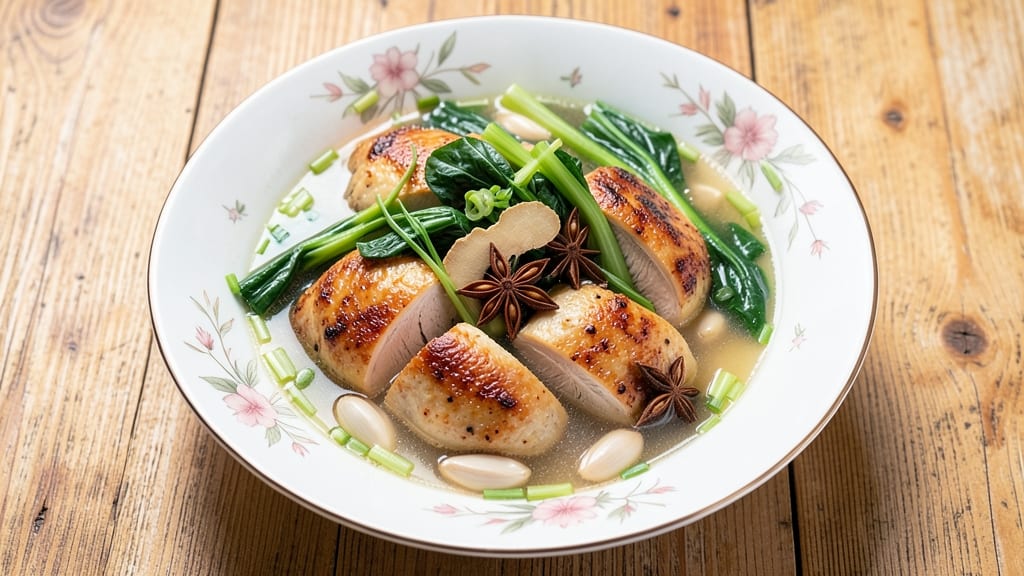
This Asian-style chicken soup recipe delivers the comforting warmth of a fragrant ginger and star anise broth that transforms ordinary chicken into restaurant-quality tender bites. The secret lies in slow-simmered aromatics—fresh ginger, garlic, and star anise—that infuse the broth with layers of earthy, citrusy depth. I developed this version after years of experimenting with traditional techniques, balancing authenticity with a 30-minute preparation that still delivers complex flavor.
The beauty of this recipe is its versatility—whether you're craving a light lunch or a hearty meal to nourish a crowd. Tender poached chicken, crisp-tender bok choy, and chewy shiitake mushrooms all absorb the aromatic broth, while rice noodles add satisfying texture.
The broth itself is the star: rich yet clear, with just the right balance of savory and slightly sweet notes from the star anise and ginger.
What makes this soup truly special is how it comes together—no fancy equipment needed, just a pot, patience, and a few key ingredients. The slow simmering process (about 25 minutes) ensures the chicken stays juicy while the vegetables retain their vibrant color and crisp texture.
The result is a bowl that's both warming and deeply satisfying, perfect for chilly evenings or when you need a meal that feels like a hug.
The best part? This recipe scales effortlessly—double the ingredients for leftovers that taste even better the next day. Whether you're serving it to a family or meal prepping for the week, each spoonful delivers that perfect harmony of tender chicken, aromatic broth, and fresh vegetables.
Let's get cooking—your taste buds will thank you.
Ingredients for asian style chicken soup
These 15 ingredients create a fragrant, restaurant-quality Asian-style chicken soup that's all about aromatic depth and comforting textures.
| Ingredient | Amount | Notes |
|---|---|---|
| Chicken Breast 🍗 | 1 ½ lb | Boneless, skinless, cut into 1-inch pieces |
| Fresh Ginger 🧄 | 2 tbsp | Finely grated, aromatic |
| Garlic Cloves 🧄 | 4 cloves | Peeled, smashed lightly |
| Star Anise 🌿 | 2 whole | Whole pods, crushed lightly |
| Green Onions 🧅 | 1 whole | White and green parts separated |
| Bok Choy 🥬 | 4 whole | Baby bok choy, leaves separated |
| Shiitake Mushrooms 🍄 | 8 whole | Fresh, stems trimmed |
| Rice Noodles 🍜 | 8 oz | Thin or medium width |
| Low-Sodium Chicken Broth 💧 | 4 cups | Homemade or quality store-bought |
| Sesame Oil 🫒 | 1 tbsp | Toasted, for finishing |
| Soy Sauce 🥄 | 1 tbsp | Light or regular |
| Salt 🧂 | 1 tsp | Kosher or sea salt |
| Black Pepper 🌶️ | ½ tsp | Freshly ground |
| Cilantro 🌿 | ¼ cup | Fresh, chopped, for garnish |
| Lime 🍋 | 1 whole | Juiced, for finishing |
The star anise and ginger are non-negotiable for that authentic, earthy-citrusy aroma. Whole star anise pods are best—crush them lightly before adding to release the oils. For ginger, fresh is a must; the store-bought powdered stuff won't cut it. If you can't find fresh ginger, substitute with 1 tbsp ginger paste (like from Trader Joe's). The chicken should be bone-in if possible—it adds incredible flavor to the broth, but boneless works too. Look for high-quality chicken breast at stores like Whole Foods or your local butcher shop for the best texture and flavor.
No star anise? Cinnamon sticks or a pinch of anise seeds can mimic some of that warmth, though nothing beats the real thing. Short on fresh ginger? Dried ginger powder at half the amount works in a pinch, but it lacks the fresh brightness. The bok choy and shiitake mushrooms should be fresh and firm—avoid any with slimy stems or brown spots. For the rice noodles, any Asian-style rice noodles work, but thin or medium width is ideal. If you can't find them, vermicelli noodles are a decent substitute. The soy sauce can be swapped for coconut aminos if you're avoiding sodium, and the sesame oil should be toasted sesame oil—the nutty flavor is essential.
This soup tastes even better the next day as the flavors meld. Store leftovers in an airtight container in the fridge for up to 4 days. For freezing, portion into single-serving containers and freeze for up to 3 months. When reheating, add a splash of water or broth to prevent the noodles from drying out. The broth can be made ahead and frozen separately—just thaw and reheat before adding the chicken and vegetables. Garnish with fresh cilantro and a squeeze of lime right before serving to keep it bright and vibrant.
Why You'll Love This Recipe
- One-Pot Magic: I swear by this—just toss chicken, ginger, and star anise into boiling water, let it simmer. No chopping mountains of veggies, no fancy techniques. The broth builds flavor while I prep the rest of dinner.
- Ginger-Garlic Bomb: That first sip? Pure satisfaction. The fresh ginger and garlic cloves caramelize into something warm and aromatic, while the star anise adds a subtle, earthy depth. It’s the kind of taste that makes you want to linger over a steaming bowl.
- Meal Prep MVP: This soup tastes even better the next day—honestly, it’s my go-to for lunches. Double the batch, store it in the fridge, and reheat with a splash of water. The chicken shreds perfectly, and the green onions add a bright finish every time.
- Budget-Friendly Powerhouse: Chicken breast is affordable, and the spices stretch the flavor without breaking the bank. I’ve made this for sick friends, potlucks, or just a lazy Sunday—it’s always a crowd-pleaser without costing a fortune.
Step-by-step instructions for Asian style chicken soup
This fragrant elixir delivers bold flavors and comforting warmth in every spoonful.
Build the Aromatic Base
In a large pot over medium-high heat, add the 1.5 lb chicken breast cut into 1-inch pieces. Let it sear for 2-3 minutes until lightly golden. This creates a flavorful foundation that infuses into the broth.
Remove the chicken and set aside. In the same pot, add 1 tbsp sesame oil and swirl to coat the bottom. Add the 2 tbsp fresh ginger, 4 cloves garlic cloves, and 2 whole star anise. Cook for 1 minute until the ginger becomes fragrant and the garlic just begins to sizzle—this releases their essential oils and forms the aromatic backbone of your soup.
Simmer the Broth with Vegetables
Pour in the 4 cups low-sodium chicken broth, scraping up any browned bits from the bottom of the pot. Return the chicken to the pot and bring to a boil. Once boiling, reduce heat to medium-low and add the 8 oz rice noodles, 4 whole bok choy (leaves separated), and 8 whole shiitake mushrooms (stems trimmed). Simmer uncovered for 12-15 minutes until the chicken is cooked through and the vegetables are tender.
Here's where the magic happens: the star anise and ginger infuse the broth with their warm, earthy notes while the mushrooms and bok choy soften just enough to release their umami depth. You'll know it's ready when the chicken pieces pull apart easily with a fork and the vegetables are bright green and fork-tender.
Season and Finish the Soup
Remove the 2 whole star anise pods and discard them. Stir in the 1 tbsp soy sauce and 1 tsp salt. Taste and adjust seasoning—you want a balance of savory, aromatic, and slightly salty. If you prefer more depth, add an extra pinch of salt or a splash of soy sauce.
Divide the 1 whole green onions (white and green parts separated) among bowls. Ladle the hot soup over the green onions, then top each serving with 0.25 cup chopped cilantro and a squeeze of 1 whole lime. The acidity from the lime brightens all the flavors, cutting through the richness of the broth.
Serve Immediately for Maximum Comfort
This soup is best enjoyed fresh from the pot. The rice noodles should be tender but still hold their shape, and the broth should coat the back of a spoon with a velvety texture. If you prefer a thicker consistency, simmer the soup uncovered for an extra 5 minutes to reduce the liquid slightly.
Garnish each bowl with a drizzle of sesame oil and a sprinkle of 0.5 tsp black pepper for a final flavor boost. Serve with steamed dumplings or a side of pickled vegetables for a complete meal that's both nourishing and deeply satisfying.
Pro Tips For Making Asian Style Chicken Soup
- Sear the Chicken First: I learned this the hard way—skipping the sear means flavorless broth. Pat the chicken dry, then hit it with a hot pan for 2-3 minutes per side until golden. The crust locks in juices and adds depth that simmering alone can’t match.
- Slice Ginger Thin: Sounds simple, but chunky ginger just sits there like a stubborn guest. Use a mandoline or sharp knife to slice it paper-thin—this way, every bite gets that bright, aromatic punch without turning the broth into ginger soup.
- Don’t Boil the Star Anise: Star anise is for simmering, not boiling. Toss it in with the broth but keep the heat at a gentle simmer (just bubbles breaking the surface). Boil it, and you’ll end up with bitter, over-extracted flavor—like burning your perfume for the scent.
- Save the Green Onions: I used to chop all the green onions into the pot, and the soup lost its fresh finish. Reserve half for garnish—those bright green tops add a pop of color and a crisp bite that cuts through the richness of the broth. (Yes, even if you’re impatient like me.)
Regional styles of this dish
Japanese Tonjiru Style
For a lighter, more delicate broth inspired by Japanese tonjiru, replace the star anise with 1-inch kombu (dried kelp) and 1 tsp shichimi togarashi (Japanese chili flakes). Use 4 cups dashi stock instead of chicken broth and add 2 cups daikon radish (julienned) for subtle sweetness.
Simmer the chicken and vegetables for 10 minutes after adding the noodles, and finish with a drizzle of yuzu juice instead of lime. 🌿
Thai Tom Kha Style
Transform this into a creamy Thai-inspired tom kha gai by adding 1 can (13.5 oz) coconut milk when simmering the broth. Swap the star anise for 1 stalk lemongrass (bruised) and 1 tbsp galangal (or ginger), and stir in 1 tbsp fish sauce instead of soy sauce.
Top with Thai basil and crushed peanuts for texture. The coconut milk adds richness while keeping the broth aromatic. 🥥
Korean Sujebi-Inspired
For a Korean-inspired twist, use 4 cups anchovy broth (or add 2 tbsp anchovy paste to chicken broth) and replace the star anise with 1 tbsp gochugaru (Korean chili flakes). Add 1 cup bean sprouts and ½ cup julienned carrots to the vegetables.
Serve with a side of kimchi and a drizzle of sesame oil for an extra umami kick. The chili flakes add a subtle heat that balances the broth beautifully. 🌶️
Vietnamese Pho-Inspired
Bring out the pho flavors by using 4 cups beef or chicken broth infused with 1 cinnamon stick and 3 cloves instead of star anise. Add 1 tbsp fish sauce and 1 tsp sugar to the broth.
Serve with rice noodles (pho noodles if available) and top with thinly sliced raw beef (optional), bean sprouts, Thai basil, and hoisin sauce for a fresh, aromatic bowl. The cinnamon and fish sauce create a deeper, more complex broth. 🥢
Quick 30-Minute Adaptation
For a faster version, use pre-cooked chicken (rotisserie or poached) and instant miso paste (1 tbsp) to deepen the broth flavor. Simmer the broth with aromatics for 5 minutes, then add the chicken, noodles, and vegetables for 8-10 minutes.
Finish with sesame oil and lime juice for brightness. This version keeps the essence of the dish while cutting prep time in half. ⏰
Vegetarian Adaptation
Swap the chicken for extra-firm tofu (pressed and cubed) or shiitake mushrooms (sliced). Use vegetable broth and add 1 tbsp soy sauce and 1 tsp mushroom powder for umami depth.
Keep the star anise and ginger for aroma, and add 1 cup bok choy and ½ cup water chestnuts for texture. The broth remains rich and aromatic while being fully plant-based. 🌱
Nutrition facts
Frequently asked questions
Can I use chicken thighs instead of breast for more flavor?
Chicken thighs add incredible richness and stay juicier during simmering. For best results, use 1.5 lb bone-in, skin-on thighs and increase simmering time to 20 minutes to ensure they're fully cooked. The skin will render fat that enhances the broth's depth, and the bones contribute extra collagen for a silkier texture.
What if I can't find star anise? What's the best substitute?
No star anise? Try ½ tsp ground anise seeds or 1 cinnamon stick for warmth, though neither captures the exact licorice-like depth. For a closer match, combine ¼ tsp fennel seeds with ¼ tsp ground coriander—this blend mimics the aromatic complexity. Always add substitutes when you first heat the broth to release their oils properly.
How do I prevent the rice noodles from turning mushy?
Cook the noodles separately for 2-3 minutes in boiling water, then drain and add them to the soup just 2 minutes before serving. This keeps them al dente while allowing them to absorb flavor. Alternatively, use thicker rice noodles (like banh pho) that hold up better to longer simmering, or reduce the simmering time to 10 minutes total.
Is this soup gluten-free? Can I make it dairy-free too?
Yes! This recipe is naturally gluten-free, but check your soy sauce (use tamari) and chicken broth (ensure no wheat additives). For dairy-free, simply omit any butter or cream—this version already contains none. The broth's richness comes from the chicken, aromatics, and umami vegetables, making it perfectly suitable for both dietary needs.
Why does my broth taste bland? What am I missing?
Bland broth usually means insufficient umami or seasoning. Boost flavor by adding 1 tbsp fish sauce or 1 tsp mushroom powder to the broth, or simmer ½ cup dried shiitake mushrooms in the broth first. Also check your salt balance—Asian soups often need 1.5 tsp salt total (including what's in broth and soy sauce). Taste as you go!