
Main Courses
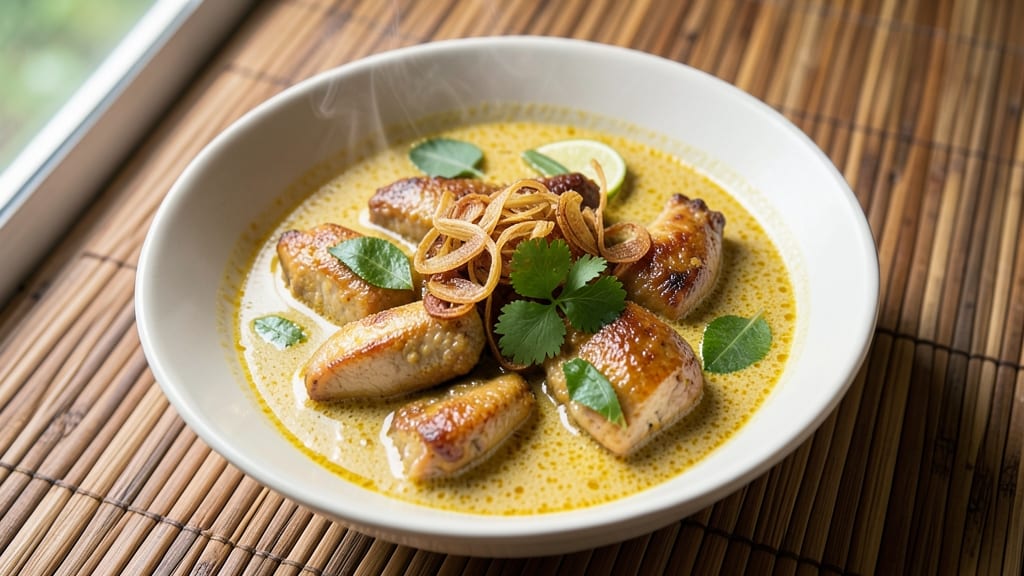
This authentic Thai yellow chicken curry brings the bold, aromatic flavors of Bangkok to your kitchen with its signature golden hue and velvety coconut cream. The secret lies in balancing sweet, sour, and spicy notes while letting the turmeric-infused curry paste develop deep, earthy complexity.
I've refined this recipe over years of testing, ensuring every spoonful delivers the restaurant-quality richness you crave without shortcuts.
The foundation starts with a proper Thai curry paste—freshly ground spices like lemongrass, galangal, and kaffir lime leaves create the aromatic base. Coconut milk transforms into a silky, golden sauce as it simmers with chicken, while fish sauce and palm sugar round out the flavors.
The dish requires patience, but the result is worth every minute: tender chicken swimming in a fragrant, balanced curry that's neither too sweet nor overly spicy.
What makes this recipe truly authentic is the attention to traditional techniques: blooming the spices in oil, simmering the curry paste until fragrant, and finishing with fresh herbs.
The aroma alone will transport you to a bustling Thai street market, while the texture—creamy yet not heavy—stays true to the dish's soul. Serve it with steamed jasmine rice to soak up every last drop of that golden, turmeric-kissed goodness.
For those new to Thai cooking, don't be intimidated—the steps are methodical, and I'll guide you through each one. The key is letting the flavors develop gradually, allowing the curry to shine. Once you taste the difference between this homemade version and takeout, you'll never go back. Let's get cooking!
Ingredients for authentic thai yellow chicken curry
Golden curry paste, fragrant coconut milk, and tender chicken create this restaurant-worthy dish.
| Ingredient | Amount | Notes |
|---|---|---|
| Boneless Chicken Thighs 🍗 | 1 ½ lb | Cut into 1-inch pieces |
| Full-Fat Coconut Milk 🥥 | 1 can (13.5 oz) | High quality, no additives |
| Thai Yellow Curry Paste 🌶️ | 3 tbsp | Homemade or quality store-bought |
| Fish Sauce 🍶 | 2 tbsp | Red Boat preferred |
| Palm Sugar 🍯 | 2 tbsp | Or substitute brown sugar |
| Lemongrass 🌿 | 3 whole stalks | White part only, finely chopped |
| Galangal 🌿 | 1 whole stalk | Peeled, finely chopped |
| Kaffir Lime Leaves 🍋 | 4 whole leaves | Torn into strips |
| Fresh Turmeric 🧄 | 1 inch | Freshly grated |
| Fresh Ginger 🌿 | 1 inch | Peeled, finely chopped |
| Garlic Cloves 🧄 | 6 cloves | Minced |
| Vegetable Oil 🫒 | 2 tbsp | For blooming spices |
| Fresh Cilantro 🌿 | ¼ cup | Chopped, for garnish |
| Lime Juice 🍋 | 1 tbsp | Freshly squeezed |
| Salt 🧂 | 1 tsp | Adjust to taste |
The curry paste is non-negotiable—Maesri or Mae Ploy are my go-tos, but any quality brand works. For the coconut milk, Thai Kitchen brand is my secret weapon (no additives, pure flavor). Galangal and kaffir lime leaves can be tricky to find—Asian markets carry them fresh, but frozen works in a pinch. If you can't find fresh turmeric, ground turmeric at half the amount is fine, though the color won't be as vibrant. The fish sauce? Red Boat is the gold standard—cheap knockoffs ruin the dish.
No galangal? Ginger is a decent substitute at double the amount (though it won't be identical). Short on kaffir lime leaves? Double the lemongrass or use lime zest. Palm sugar unavailable? Brown sugar works perfectly. The chicken thighs are key—bone-in stays juicier, but boneless works too. For extra richness, stir in 1 tbsp of coconut cream at the end. And if you're feeling adventurous, toast the curry paste in the oil for 2 minutes to deepen the flavors—trust me on this.
This curry tastes even better the next day as flavors meld. Store it in the fridge for 4-5 days or freeze for 3 months. The coconut milk separates when refrigerated? Stir vigorously before reheating. For serving, I always make extra rice—jasmine rice is ideal—and keep the curry warm in a slow cooker. The aroma alone will have everyone gathering around your table.
Why You'll Love This Recipe
- One-Pot Magic: The chicken thighs simmer right in the coconut milk—no extra pots, no fuss. Just toss everything in, let it bubble, and walk away while the curry paste works its flavor spell.
- Turmeric Kiss: That vibrant yellow? It’s not just for looks—the curry paste and palm sugar balance the heat with a sweet, earthy depth. Honestly, the first bite makes you wonder why you didn’t make this sooner.
- Leftovers That Shine: This curry tastes better the next day—richer, more cohesive. I freeze portions too; reheating with a splash of water keeps it creamy and ready for lazy weeknights.
- Budget-Friendly Luxury: Chicken thighs stretch further than breasts, and full-fat coconut milk adds richness without breaking the bank. Between us, this recipe feels like a fancy dinner for half the price.
Step-by-step instructions for authentic Thai yellow chicken curry
Here's how to build this vibrant, aromatic curry with layers of authentic Thai flavor.
Prepare the Aromatics and Chicken
Start by cutting the 1.5 lb boneless chicken thighs into 1-inch pieces - this size ensures even cooking without drying out. In a large bowl, combine the 3 whole stalks lemongrass (white part only, finely chopped), 1 whole stalk galangal (peeled, finely chopped), 4 whole leaves kaffir lime leaves (torn into strips), 1 inch fresh turmeric (grated), 1 inch fresh ginger (peeled, finely chopped), and 6 cloves garlic (minced). This aromatic blend forms the flavor foundation of your curry.
Heat 2 tablespoons vegetable oil in a heavy-bottomed pot over medium heat. Add the chicken pieces and cook for 3-4 minutes, turning occasionally, until lightly browned on all sides. This step develops the Maillard reaction, creating depth of flavor before we add the other ingredients. Remove the chicken and set aside temporarily - we'll return it later.
Bloom the Spices and Build the Curry Base
In the same pot (with all those flavorful browned bits still clinging to the bottom), add the 3 tablespoons Thai yellow curry paste. Stir continuously for 1-2 minutes until the paste darkens and releases its rich, earthy aromas. This is where the curry's signature color and flavor develop - don't rush this step.
Add the 2 tablespoons palm sugar and stir for another 30 seconds until it begins to caramelize slightly. Then pour in the 2 tablespoons fish sauce and the aromatic mixture you prepared earlier. Stir well to combine, letting everything meld together for 1 minute before adding the 1 can (13.5 oz) full-fat coconut milk. The coconut milk should be stirred in gently to avoid breaking up the aromatic mixture.
Simmer the Curry to Perfection
Return the chicken to the pot and bring everything to a gentle simmer over medium-low heat. Here's the key: maintain a barely bubbling simmer - you want the curry to cook slowly and evenly. Partially cover the pot and let it simmer for 25-30 minutes, stirring occasionally. This slow cooking allows the flavors to develop fully and the chicken to become tender without drying out.
After 20 minutes, taste and adjust seasoning. You might need to add a pinch more salt or a splash of water if the curry is too thick. The sauce should coat the back of a spoon but still be fluid enough to spoon over rice. The chicken is done when it reaches 165°F internally and pulls away from the bone easily with a fork.
Finish and Serve with Authentic Touches
Remove the pot from heat and stir in the 1 tablespoon lime juice. This brightens the flavors and balances the richness of the coconut milk. Let the curry sit off the heat for 5 minutes to allow the flavors to meld completely. The aroma should be intoxicating - that's your signal that it's ready.
Ladle the curry into serving bowls and garnish with 0.25 cup chopped fresh cilantro. Serve immediately with steamed jasmine rice to soak up that luscious coconut cream. The authentic Thai flavors will shine through in every bite - the turmeric-kissed coconut richness, the aromatic lemongrass and galangal, and the perfect balance of sweet, sour, and umami from the fish sauce.
Pro Tips For Making Authentic Thai Yellow Chicken Curry
- Bloom the Paste First: I learned this the hard way—skipping the initial blooming step means your curry will taste like it’s missing something. Fry the yellow curry paste in oil for 2–3 minutes until it’s deeply fragrant and the turmeric starts releasing its golden color. This isn’t just about flavor; it’s where the paste’s soul hits the pan.
- Use Two Cans of Coconut Milk: Sounds weird, but it works: start with one can of full-fat coconut milk to deglaze the paste, then add the second can later. The first one thickens into a glossy, rich base, while the second adds creaminess without making the curry watery. (Yes, even if you’re impatient like me.)
- Salt the Chicken Before Cooking: My grandmother swore by this, and she was right: season the chicken thighs with salt and a pinch of turmeric before they hit the pan. It keeps them juicy and prevents the curry from tasting flat—no matter how much fish sauce you add later. (Pro move: let them sit 10 minutes after salting.)
- Balance Heat with Sugar Early: After burning three batches, I finally figured out the order matters. Add the palm sugar with the fish sauce right after the coconut milk goes in—this tames the paste’s initial kick while letting the sweetness bloom. Stir it in for 30 seconds before adding the chicken, or you’ll end up with a curry that’s either too sharp or too cloying.
Wine and beer pairings for this authentic thai yellow chicken curry
Thai White Wine Pairings
For this vibrant yellow curry, I always reach for a crisp Thai Riesling—its bright acidity and subtle floral notes cut through the rich coconut and spice beautifully. Look for Oakley Riesling from Thailand, which balances the curry's sweetness with its own citrusy freshness.
If you can't find Thai Riesling, a dry German Riesling works wonders too. 🍷
Thai Red Wine Options
A medium-bodied Thai Cabernet Sauvignon like Chateau La Tour offers enough fruit to complement the curry without overpowering its delicate aromatics. For a bolder choice, try a Pinot Noir from Mae Rim—its earthy notes harmonize with the turmeric and lemongrass.
Avoid heavy reds like Syrah, which can clash with the coconut's creaminess.
Light Beer Pairings
For beer lovers, a Thai lager like Singha or Leo is my go-to—their clean, crisp profiles refresh your palate between bites. If you prefer craft beer, a Belgian Witbier (like Hoegaarden) adds a citrusy contrast that mirrors the curry's lime finish.
Avoid heavy IPAs or stouts, which can overwhelm the dish's balance.
Non-Alcoholic Refreshers
For a non-alcoholic option, I love serving Thai iced tea (sweetened with palm sugar) alongside the curry. It mirrors the dish's sweet-spicy profile while keeping things refreshing. Another great choice is limeade with mint and chili, which echoes the curry's bright, zesty flavors. ✨
Cocktail Pairings
For a festive touch, a Tom Yum-inspired cocktail made with gin, lime juice, lemongrass syrup, and a splash of fish sauce bridges the gap between the curry and your drink.
The spicy-sour notes complement the dish perfectly. If you prefer something simpler, a mojito with Thai basil adds a herbal twist that enhances the curry's aromatic depth.
Nutrition facts
Frequently asked questions
Why is my curry paste not releasing its aroma when blooming?
This usually happens if you're not cooking it long enough or at the right heat. Use medium heat and stir continuously for 1-2 minutes until the paste darkens and you smell those deep, earthy aromas. If it's still not releasing, your paste might be old—fresh paste blooms much better than dried or expired versions.
Can I use chicken breast instead of thighs?
Yes, but thighs are ideal because they stay juicier during the long simmer. If using breast, cut into ½-inch pieces and cook for 15-20 minutes less to avoid drying out. Add them to the curry only in the last 10 minutes of simmering for best results.
How do I adjust the spice level?
The recipe balances sweet, sour, and spicy—if it's too mild, add ½ tsp chili flakes or 1 tsp sambal oelek at the end. For extra heat, stir in 1-2 chopped Thai chilies with the aromatics. If it's too spicy, balance with more palm sugar or lime juice.
What if I don't have kaffir lime leaves?
No worries! Double the lemongrass or use lime zest (from 1 lime) for a similar citrusy brightness. For the aromatic depth, add 1 extra inch of fresh ginger or a pinch of ground coriander. The dish will still taste amazing—just slightly different!
Can I make this curry ahead of time?
It tastes even better the next day as flavors meld. Store in an airtight container in the fridge for 4-5 days or freeze for 3 months. Reheat gently on low heat, stirring occasionally, and add a splash of water if too thick. The coconut milk may separate—just stir vigorously before serving!