
Main Courses
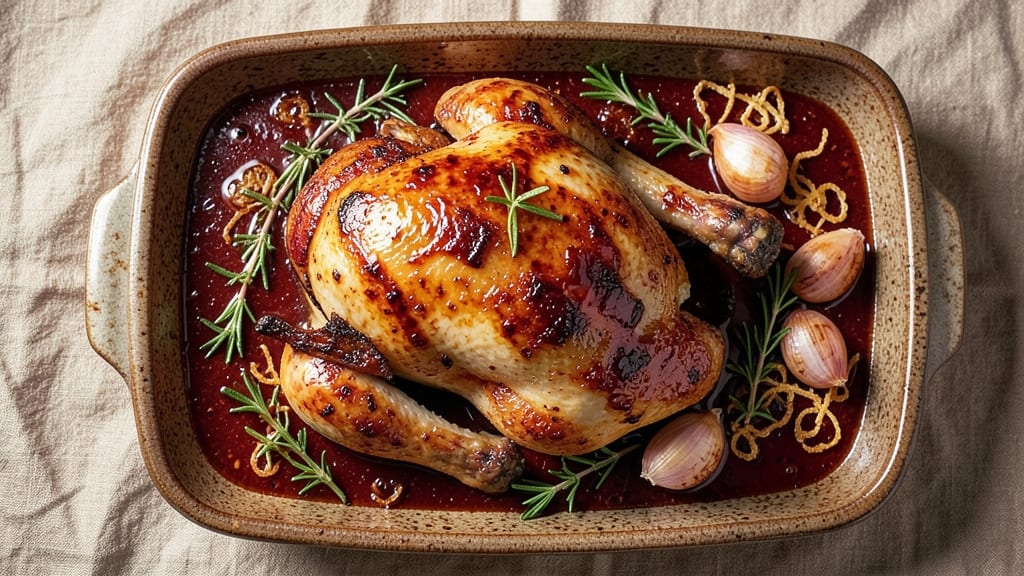
This balsamic roast chicken recipe delivers juicy golden meat with a glazed caramelized skin that crackles with every bite. The secret lies in a rich balsamic reduction brushed over the chicken during roasting, transforming simple ingredients into restaurant-quality results.
I developed this method after years of perfecting the balance between crispy skin and tender meat—no dry, overcooked poultry here.
The process starts with a simple marinade of olive oil, garlic, and herbs, then builds to a sticky-saucy finish as the balsamic caramelizes in the oven. You'll baste the chicken every 20 minutes, ensuring maximum flavor penetration and that signature glossy crust.
The result? A whole chicken so flavorful, it becomes the star of any meal without needing sides.
What makes this recipe special is how the balsamic elevates every component—the skin becomes irresistibly crispy, the meat stays moist, and the sauce clings to each bite like a sweet-savory blanket.
The aroma alone will have your kitchen smelling like a Parisian bistro by the time it's done. Perfect for Sunday dinners or special occasions, this method guarantees a showstopping centerpiece.
Pair with roasted vegetables or crusty bread to soak up every last drop of that caramelized balsamic glaze. The technique is straightforward but delivers restaurant-quality results at home—no shortcuts, just proven methods for foolproof success. Let's get started on creating your most impressive roast chicken yet.
Ingredients for balsamic roast chicken
Restaurant-quality balsamic glaze meets simple pantry staples for a showstopping centerpiece.
| Ingredient | Amount | Notes |
|---|---|---|
| Whole Chicken 🍗 | 4 lb | Fresh, preferably organic, skin-on |
| Extra-Virgin Olive Oil 🫒 | ½ cup | High-quality, fruity variety |
| Balsamic Vinegar 🍷 | ½ cup | Aged, dark balsamic preferred |
| Garlic Cloves 🧄 | 6 cloves | Fresh, minced for marinade |
| Fresh Rosemary 🌿 | ½ cup | Chopped, stems removed |
| Fresh Thyme 🌿 | ¼ cup | Leaves only, chopped |
| Kosher Salt 🧂 | 2 tbsp | Diamond Crystal preferred |
| Freshly Ground Black Pepper 🌶️ | 1 tbsp | Coarsely ground |
| Honey 🍯 | 2 tbsp | Light, for glaze balance |
| Unsalted Butter 🧈 | ½ cup | Cold, cubed for basting |
| Fresh Lemon Juice 🍋 | 2 tbsp | Freshly squeezed |
The chicken is the foundation, so prioritize quality. A 4-pound organic bird from Whole Foods or your trusted butcher ensures optimal flavor and texture. Look for even fat distribution—this prevents dryness during roasting. The skin must be intact for that signature crackle; pat it dry thoroughly before seasoning. Fresh herbs elevate the marinade, but if you're short on time, dried rosemary and thyme at half the amount work in a pinch. For the balsamic vinegar, aged varieties like Barolo or traditional Italian balsamic deliver deeper caramel notes—avoid the cheaper, sweeter versions.
No extra-virgin olive oil? Light olive oil or avocado oil suffices, though flavor depth will differ. The honey in the glaze can be swapped for maple syrup for a vegan adaptation, though the flavor profile shifts slightly. If you're concerned about the chicken drying out, brine it for 30 minutes beforehand using 1/4 cup kosher salt per gallon of water. The butter used for basting should be cold and cubed—this creates a luxurious sauce as it melts. For a smokier finish, add 1/2 teaspoon smoked paprika to the marinade. Every component here balances sweet, tangy, and savory notes—don't skip the lemon juice, even if it seems minor.
Prep the chicken and marinade ingredients up to 24 hours ahead for convenience. Store the chicken uncovered in the fridge overnight—this helps render fat and enhances crispiness. The balsamic reduction can be made a day in advance and reheated gently before brushing. Leftovers keep for 3 days in the fridge, though the skin loses its crispness. For reheating, cover with foil and warm at 300°F for 15 minutes. The glaze thickens as it cools, so reheat with a splash of water if needed. Portion the meat into containers for easy lunches—just reheat the skin-side down for maximum crackle.
Why You'll Love This Recipe
- I’ll be real: this feeds my family of four with room for leftovers, and it’s still on the table by 6:30. Double the recipe for game day or potlucks, or meal prep the leftovers for sandwiches or salads. It’s my go-to for when I need something reliable that won’t let me down.
- One-Pan Magic: Honestly, I love recipes that don’t require a million dishes—this one’s all about that. Just rub the chicken with olive oil, tuck in the garlic and rosemary, drizzle with balsamic, and let the oven do the rest. No chopping boards, no extra pans, just pure simplicity that actually delivers.
- Crispy-Creamy Perfection: Between us, that balsamic glaze is where it’s at. It caramelizes into a sticky, tangy crust while keeping the meat juicy inside—like a fancy restaurant finish but with ingredients you already own. The rosemary adds a piney aroma that makes the whole kitchen smell like a Sunday brunch.
- Weeknight Workhorse: I’ll be real: this feeds my family of four with room for leftovers, and it’s still on the table by 6:30. Double the recipe for game day or potlucks, or meal prep the leftovers for sandwiches or salads. It’s my go-to for when I need something reliable that won’t let me down.
Step-by-step instructions for balsamic roast chicken with caramelized skin
Master this technique for perfectly juicy meat and irresistible glaze every time.
Prepare the Chicken with Herbs and Olive Oil
Begin by removing the chicken from its packaging and placing it on a clean cutting board. Pat the skin completely dry with paper towels—this is critical for crispy skin. In a small bowl, combine the 0.5 cup extra-virgin olive oil, 0.5 cup balsamic vinegar, 2 tbsp honey, 2 tbsp fresh lemon juice, 6 cloves minced garlic, 0.5 cup chopped fresh rosemary, 0.25 cup chopped fresh thyme, 2 tbsp kosher salt, and 1 tbsp freshly ground black pepper. Mix thoroughly until all ingredients are fully incorporated.
Create slits in the chicken skin, being careful not to cut too deeply into the meat. Gently loosen the skin over the breast and thighs to create pockets. Pour half of the marinade mixture under the skin, massaging it evenly. Brush the remaining marinade over the exterior skin, ensuring full coverage. Let the chicken sit at room temperature for 30 minutes before roasting—this allows the flavors to penetrate deeply and the chicken to cook more evenly.
Roast at High Heat for Crispy Skin
Preheat your oven to 425°F for 20 minutes to ensure even cooking. Place the chicken on a rack set inside a roasting pan, breast-side up. Roast for 45 minutes, basting with any accumulated pan juices every 15 minutes. The skin should develop a deep golden-brown color with caramelized edges—this is your first visual cue that the chicken is cooking perfectly.
After 45 minutes, reduce the oven temperature to 350°F. This adjustment prevents the skin from over-browning while allowing the chicken to cook through evenly. Continue roasting for an additional 45-60 minutes, or until the internal temperature reaches 165°F when measured at the thickest part of the thigh. A meat thermometer is essential here—it ensures the chicken is fully cooked without overcooking.
Baste with Butter for Extra Shine and Flavor
Once the chicken reaches 165°F, remove it from the oven and transfer it to a cutting board. Let it rest for 10 minutes before basting—this resting period allows the juices to redistribute, ensuring every slice remains juicy. While the chicken rests, melt the 0.5 cup unsalted butter in a small saucepan over low heat until it becomes a smooth, liquid glaze.
Using a pastry brush, generously coat the entire surface of the chicken with the melted butter. This step adds an extra layer of richness and enhances the caramelized skin. Return the chicken to the oven for 5-10 minutes to allow the butter to crisp slightly, creating a glossy finish. The butter will also help to lock in moisture, keeping the meat tender and flavorful.
Rest and Serve for Maximum Juiciness
After basting, remove the chicken from the oven and let it rest for an additional 10-15 minutes before carving. This resting period is crucial—it allows the juices to settle back into the meat, preventing them from running out when you slice into it. Tent the chicken loosely with aluminum foil to keep it warm while it rests.
To serve, carve the chicken into 8-10 pieces per serving, ensuring each slice is uniform in size. The skin should be crispy and caramelized, while the meat should be golden and juicy. Serve immediately with the pan juices reduced into a glaze if desired, or drizzle the melted butter from the basting step over the top for added richness. The combination of the balsamic glaze and crispy skin creates a dish that is both elegant and deeply satisfying.
Pro Tips For Making Balsamic Roast Chicken
- Dry the Skin First: Pat the chicken thoroughly—inside and out—with paper towels before oiling it. I learned this the hard way: skipping this step means the skin won’t crisp, and your balsamic glaze will just steam off instead of caramelizing into a glossy crust.
- Use a Mix of Vinegars: Swap half the balsamic vinegar for red wine vinegar in the marinade or pan juices. The acidity cuts through the sweetness of the balsamic, brightening the flavor without overpowering the chicken—my grandmother swore by this, and she was right.
- Start High, Finish Slow: Roast the chicken at 425°F (220°C) for the first 30 minutes to render fat and sear the skin, then drop to 350°F (175°C). After burning three batches at high heat, I finally figured out that patience here guarantees juicy meat and a deeper balsamic glaze.
- Infuse the Oil: Heat the olive oil with smashed garlic cloves and rosemary sprigs for 2 minutes before adding the chicken. This flavors the oil directly, so every bite gets that aromatic punch—yes, even if you’re impatient like me, don’t skip the preheating.
Best sauces and condiments for this recipe
Balsamic Reduction Glaze
This is the star of your dish—a rich, caramelized reduction made from the pan drippings and extra balsamic. After removing the chicken, place the roasting pan on the stovetop over medium-high heat. Add ¼ cup water to deglaze, scraping up all the browned bits with a wooden spoon.
Let it simmer for 8-10 minutes until reduced by half, then stir in 1 tbsp honey and 1 tbsp fresh lemon juice to balance the flavors. Brush this glaze over the chicken before serving for that signature sticky finish. 🍷
Honey Butter Sauce
For an extra-luxurious touch, mix ¼ cup melted unsalted butter with 1 tbsp honey and 1 tsp balsamic vinegar in a small bowl. Drizzle this over each serving or use it as a dipping sauce for crusty bread.
The honey adds subtle sweetness that complements the tangy balsamic perfectly. I love serving this with roasted Brussels sprouts—they soak up the sauce beautifully. 🍯
Herb-Infused Olive Oil
Save any leftover marinade or pan juices to make a quick herb-infused olive oil. Heat ¼ cup extra-virgin olive oil in a small saucepan with 1 tsp dried rosemary and 1 tsp dried thyme for 2-3 minutes until fragrant.
Strain through a fine-mesh sieve and drizzle over the chicken or use as a finishing oil for salads. This adds another layer of aromatic depth to your meal. 🌿
Pan Sauce Upgrade
Take your pan sauce to the next level by whisking in 1 tbsp Dijon mustard and 1 tbsp chicken stock after reducing the drippings. Simmer for 2 more minutes to thicken slightly, then finish with a pinch of salt and black pepper.
This adds a subtle tang that cuts through the richness of the chicken. I serve this sauce spooned over individual portions for an elegant presentation. 💫
Sweet-Spicy Glaze
For a bold twist, add ½ tsp cayenne pepper and 1 tsp smoked paprika to your balsamic reduction while simmering. This creates a sweet-spicy contrast that pairs perfectly with the crispy skin. I recommend using this variation for spice-loving guests—it’s a crowd-pleaser that still keeps the dish balanced. 🌶️
Lemon-Garlic Aioli
For a creamy contrast, blend ¼ cup mayonnaise, 1 tbsp fresh lemon juice, 1 minced garlic clove, and 1 tsp chopped fresh parsley until smooth. Drizzle this aioli over the chicken or serve it on the side for dipping.
The bright citrus cuts through the richness of the balsamic beautifully. This is my go-to when serving the chicken with fresh greens. 🍋
Nutrition facts
Frequently asked questions
Can I use bone-in or boneless chicken for this recipe?
This recipe works best with a bone-in, skin-on chicken (like a whole chicken or thighs) because the bones help retain moisture and the skin creates that signature crispy texture. For boneless breasts, reduce the roasting time to 20-25 minutes at 375°F and skip the high-heat initial roast. The balsamic glaze will still work, but the texture won't be as rich.
How do I prevent the chicken from drying out?
Keep the chicken moist by basting every 15-20 minutes with pan juices and melted butter. Never skip the 10-minute rest after roasting—this lets juices redistribute. For extra insurance, brining the chicken for 30 minutes in a saltwater solution (1/4 cup kosher salt per gallon of water) adds moisture retention. Also, avoid overcrowding the pan.
Can I make this recipe ahead of time?
Prepare the chicken up to 24 hours ahead by marinating it (uncovered in the fridge) and storing it uncovered overnight—this renders fat for crispier skin. Reheat at 300°F for 20 minutes covered with foil, then crisp the skin under the broiler for 3-5 minutes before serving. The glaze can also be made 1 day ahead and reheated gently.
What's the best way to carve this roast chicken?
Start by removing the legs at the joint, then slice the breast away from the carcass in one piece. Cut each breast half horizontally into 2-3 even slices per serving. For presentation, arrange slices with the skin-side up and drizzle with extra glaze. Use kitchen shears for clean cuts—this prevents tearing the meat. Always carve against the grain for tenderness.
Can I substitute balsamic vinegar with something else?
For a similar tangy-sweet profile, use red wine vinegar + 1 tbsp honey (1:1 ratio). For a fruitier taste, try apple cider vinegar + 1 tbsp maple syrup. Avoid white vinegar—it lacks the depth of flavor. If you're avoiding vinegar entirely, a mix of orange juice + 1 tsp citrus zest works in a pinch, though the texture will differ slightly.